FROM STACK TRACES TO RUNBOOKS: MAKING AI AGENTS DETERMINISTIC AND DEBUGGABLE
AI coding agents are shifting from prompt fiddling to deterministic, documented workflows you can actually debug and operate. [The New Stack](https://thenewsta...
AI coding agents are shifting from prompt fiddling to deterministic, documented workflows you can actually debug and operate.
The New Stack argues classic stack traces don’t fit AI behavior; we need traceable dataflows across prompts, tools, and context.
A companion guide on turning an AI coding agent into a deterministic Java Spring expert shows how to clamp variability and make outcomes repeatable.
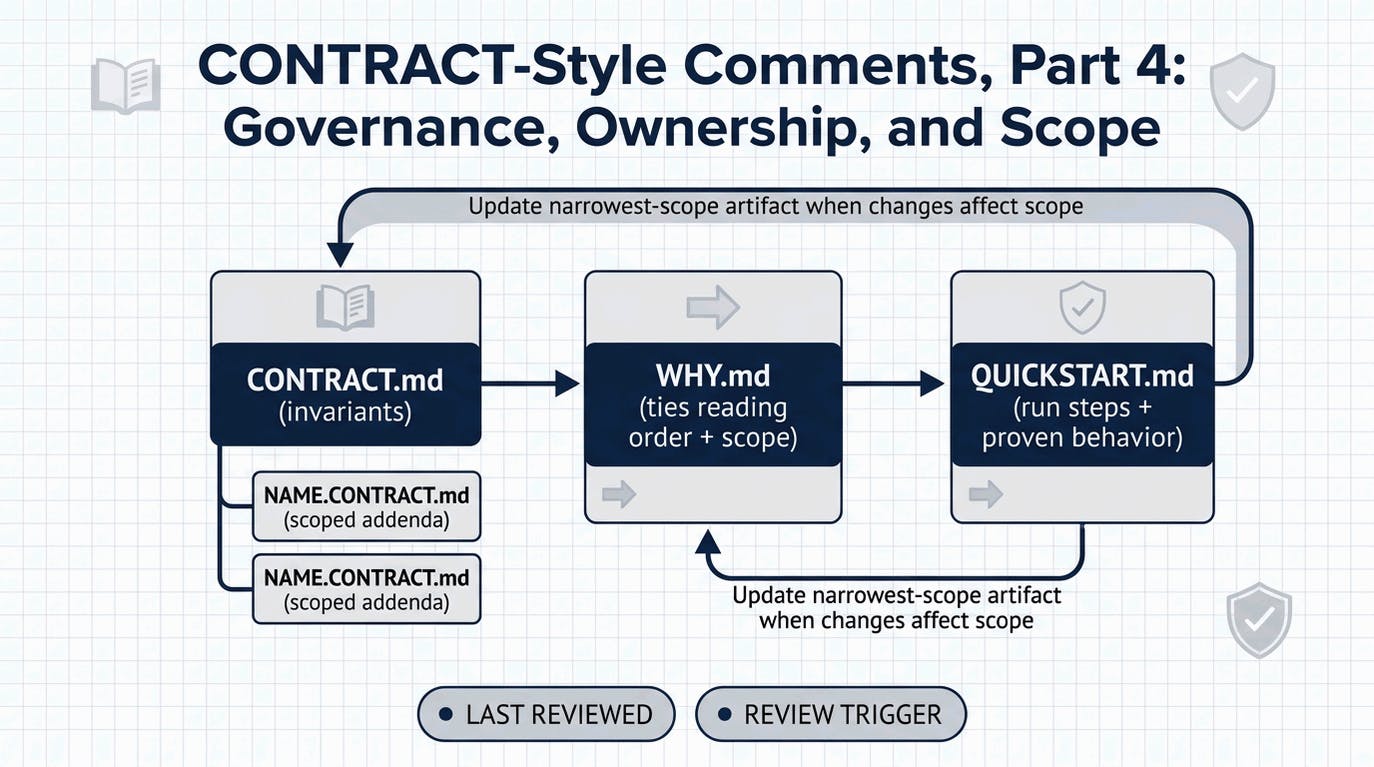
Two posts on HackerNoon push documentation stewardship and a “narrowest‑scope” rule to curb context drift: Why Agentic Software Development Needs Documentation Stewardship and Keeping AI Documentation Clean With the Narrowest-Scope Rule.
Deterministic, documented agents reduce flaky behavior and unblock CI/CD, SLOs, and incident response.
Traceable runs let teams root-cause failures across prompts, tools, and data instead of guessing.
-
terminal
Measure run-to-run variance under fixed seeds, tools, and context; track determinism rates per task.
-
terminal
Pilot a contract.md and narrowest-scope rule for agent context; compare error and rollback rates before/after.
Legacy codebase integration strategies...
- 01.
Add tracing around prompts, tool calls, and retrieved context before replacing existing flows.
- 02.
Gate agent changes behind feature flags; record inputs/outputs to enable postmortems and rollbacks.
Fresh architecture paradigms...
- 01.
Start with deterministic defaults (fixed tools, seeds, context budget) and a contract.md at repo root.
- 02.
Design tasks as composable, testable steps with narrow context to limit drift and simplify debugging.
Get daily AGENTIC-WORKFLOWS + SDLC updates.
- Practical tactics you can ship tomorrow
- Tooling, workflows, and architecture notes
- One short email each weekday