OPENINFERENCE EVALS ADD OPENAI AGENTS SDK SUPPORT AND SKILL-LEVEL CHECKS (STRANDS-AGENTS/EVALS V1.2.0)
strands-agents/evals v1.2.0 adds OpenAI Agents SDK support and skill-level evaluators to tighten observability for AI agents. The latest [strands-agents/evals ...
strands-agents/evals v1.2.0 adds OpenAI Agents SDK support and skill-level evaluators to tighten observability for AI agents.
The latest strands-agents/evals v1.2.0 maps OpenAI Agents SDK sessions into OpenInference and ships skill-level evaluators for tool-enabled agents, with fixes for multi-agent span roots and cleaner span handling.
This lines up with “production-grade” advice: evaluate before release, in CI, and on sampled prod traffic with layered checks and LLM judges — see DevOps.com’s guide.
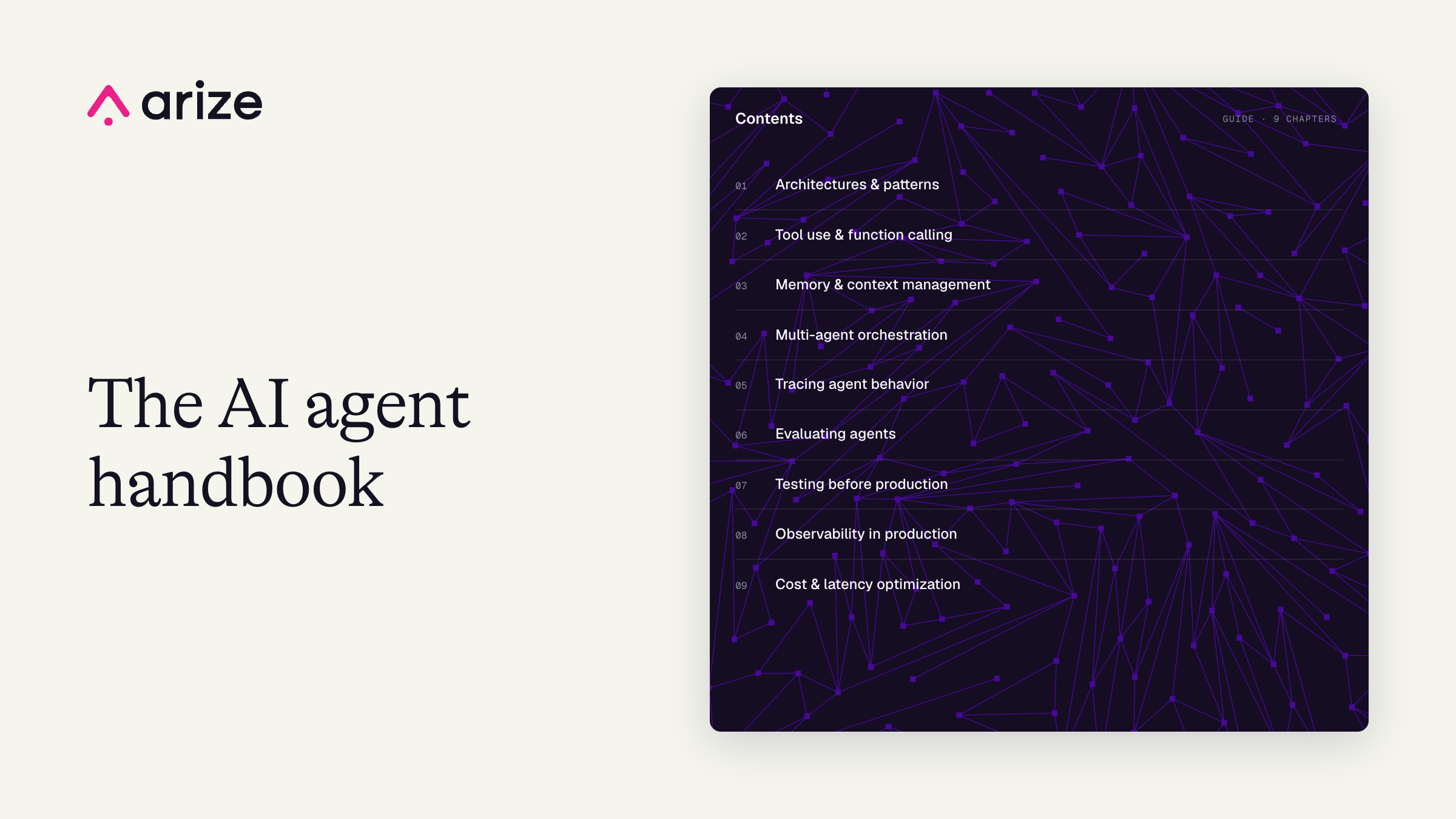
For architecture context on what “agents” actually are (vs workflows) and how control loops and tools fit, see Arize’s AI Agent Handbook.
Standardized traces and evaluators across OpenAI and Claude-style agents make quality signals comparable and automatable.
Better span handling and skill-level scoring help catch silent regressions that uptime and latency miss.
-
terminal
Pipe an OpenAI Agents SDK run through the OpenInference mapper; verify multi-agent traces, root span selection, and non-mutating span creation.
-
terminal
Attach the new skill-level evaluators to tool calls; simulate bad retrieval/tool failures and confirm CI gates and sampled prod evals trigger.
Legacy codebase integration strategies...
- 01.
Layer OpenInference mapping on existing LangChain/OpenTelemetry traces and pin compatible instrumentation per the release notes.
- 02.
Mine production failures and low-confidence traces into a growing eval set, then schedule sampled live-traffic checks.
Fresh architecture paradigms...
- 01.
Adopt OpenInference from day one and design a layered evaluator stack wired into CI and sampled prod traffic.
- 02.
Model agents as skills/tools with per-skill evaluators and strict stop/escape hatches to bound behavior.
Get daily OPENAI-AGENTS-SDK + SDLC updates.
- Practical tactics you can ship tomorrow
- Tooling, workflows, and architecture notes
- One short email each weekday